Democrats Took Congress. Brussels Responded by Shutting Americans Out of Europe's AI Trading Platform.
Within 72 hours the European Parliament suspended the Turnberry trade agreement and an EU-licensed AI trading platform froze 40,000 US client accounts. Why Americans can no longer log in, how the algorithm made the money, and what digital financial sovereignty means for anyone trading on a platform abroad.
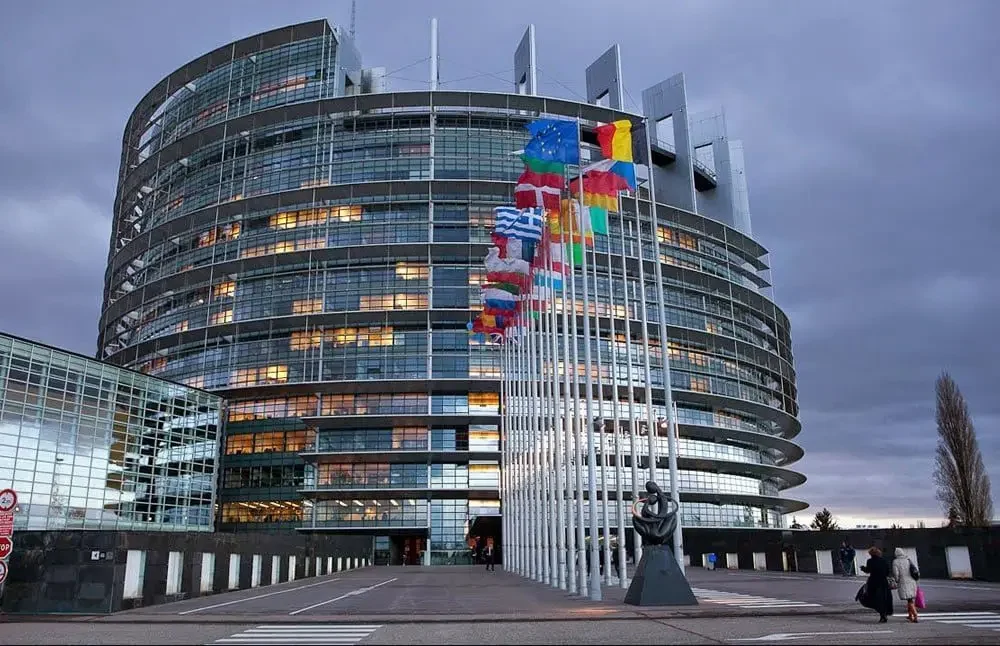
BRUSSELS, 6 November. When it became clear on the night of 3 November that Democrats had taken both chambers of Congress, nobody in Brussels celebrated. "Trump stays in the White House until January 2029," a senior European Council official told reporters the next morning. "Which means the pressure continues. He will hit harder now, because he has nothing left to lose."
Forty-eight hours later, the European Parliament suspended the Turnberry trade agreement. Twelve hours after that, American users of an AI trading platform licensed in the EU saw a single line on their dashboard: "Access suspended. Restoration impossible until the EU-US regulatory status is resolved."
This time the workarounds failed. The AI platform had stopped taking US residents in the summer, and thousands of American users had been reaching it through a VPN ever since. The verification system now checks the jurisdiction of the bank that issued the card or account rather than the IP address, so an American card is refused no matter where the laptop is sitting. For the first time the block is not technical. It is legal, and it is financial.
It is also the most concrete result so far of a phrase Brussels has used for two years without much visible consequence: digital financial sovereignty. This is what it looks like when it is applied to one company, in one week, against the largest market in the world.
Everything that broke in 72 hours
The sequence matters, because each step made the next one easier.
- 3 November, 22:00 EasternDemocrats take 54 Senate seats and at least 253 in the House, ending Republican control of Congress. The White House calls the result "expected" and blames the cost of living.
- 4 November, 09:00 BrusselsParliament's trade committee meets in emergency session. A legal service note read into the record states that the US Supreme Court ruling of 20 February 2026 removed the legal basis for several Turnberry provisions: "The legal framework underpinning the agreement no longer exists."
- 5 November, 14:30Parliament votes to suspend the agreement. A separate clause of the Digital Financial Sovereignty Act switches on, and platforms licensed in the EU stop serving US-based clients.
- 6 November, 06:00The platform implements the directive. US accounts are frozen, not seized. Withdrawals stay blocked until the account holder opens a European bank account in person.
None of this was announced as a punishment. The language used in Brussels was procedural: suspension, safeguard clauses, regulatory equivalence. The effect on the American side of the Atlantic was less procedural.
Why an AI platform, of all targets
Over the past year this AI trading platform became one of the symbols of what Brussels calls digital financial sovereignty: an algorithm built and licensed in the EU, deposits held in European banks, and a client list that grew quickly among people who did not want their savings sitting in a single domestic account. The pitch is simple. The AI reads thousands of market signals a minute across currencies, indices and commodities, then opens and closes trades without a human in the loop. No charts to watch, no advisory fee, and a stated minimum deposit of €250. According to figures supplied by the platform, more than 40,000 US clients opened accounts in the last quarter alone after closing positions at US brokerages. The average balance was $80,000. The total moved, on the platform's own estimate, was about $3.2 billion.
All four figures come from the platform. This publication has not audited them, and they are not a forecast of what any account will earn.
"When you realise your retirement money can grow faster on an AI algorithm than in a US brokerage account, it stops being a choice," Michael R., a 47-year-old engineer from Austin, said. "It is arithmetic." His account was frozen on 6 November with a balance of $14,700. "No warning, no transition period. I can see the number. I cannot touch it."
The money has not been confiscated. It is suspended. Access returns when the EU-US regulatory status is resolved, or when the account holder opens a European bank account in person. One of those things is a diplomatic process with no deadline. The other requires a flight.
This is not an isolated strike
Read on its own, a platform freezing foreign accounts looks like a commercial dispute. In sequence, it looks like the latest link in a chain.
July 2026. The US Treasury intervenes to support the yen and sells euros from its own reserves to do it. The European Central Bank learns about the operation after the fact, not before. Officials in Frankfurt describe it privately as the week decades of central bank coordination stopped being a given.
Autumn 2026. The EU fines Apple, Meta and Google a combined €1.59 billion under the Digital Markets Act, which is summarised in the briefing below. Washington responds by threatening 100% tariffs on any country that introduces a digital tax, and opens an investigation into the EU's carbon border mechanism, calling it a discriminatory trade barrier. What the European Parliament has said about the trade relationship is summarised in the briefing below.
6 November 2026. The AI trading platform. The first time the bloc has used a financial clause against American retail clients rather than against American companies. And the first time the algorithm itself, rather than the company behind it, was the thing that made European regulators interested.
Background · What the sovereignty clause does
As described in this article, the clause lets platforms licensed in the EU stop serving clients resident in a jurisdiction that Brussels considers to be applying coercive trade measures. It was drafted with companies in mind. Its effect on individual account holders is what caught US clients by surprise.
I opened an account to see whether it works
I am a European journalist, so the restrictions do not apply to me. I registered on 5 October, while registration was open to everyone, and deposited €250, the minimum.
Day 1. Balance: €228. The algorithm opened two trades and both were in the red at the close. I left them alone.
Day 2. Balance: €411. A third trade closed in profit.
Day 5. Balance: €1,203. Four consecutive profitable trades, with no manual intervention from me. I checked the history and found no corrections behind the scenes.
Day 7. Balance: €3,915. I requested a withdrawal of €2,650 to my bank account. The money arrived the next day, 18 hours after the request.
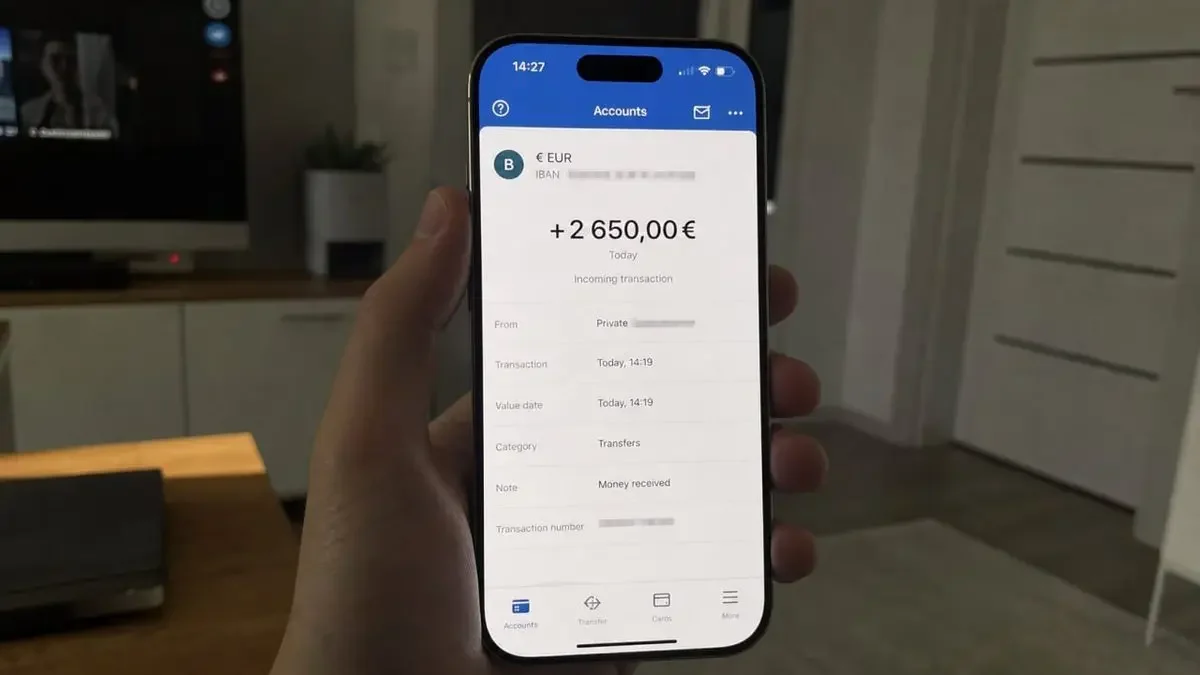
The platform charges 8% on profit only. If a month ends flat, the AI takes nothing. That structure is unusual enough to be worth stating plainly, and it is also why the platform has an interest in volatility rather than in calm markets.
What one account over one week cannot show: how the algorithm behaves in a sustained fall, what the spread costs are in thin trading hours, and how quickly withdrawals are processed once a platform is under pressure. Those are the questions to ask before any deposit, in writing, and the answers matter more than a screenshot.
What happens next
Democrats take control of Congress in January 2027. Until then the president keeps the veto and the unilateral tariff powers he has used all year, and no tariff-reduction bill passes without his signature.
Meanwhile the AI trading platform remains open to residents of the EU, the UK, Canada, Australia and a long list of other jurisdictions, with a minimum deposit of €250. People familiar with the company's onboarding say the cap on new accounts is operational rather than political: when the volume of new European clients exceeds processing capacity, registration is paused, which is standard practice for a platform that verifies bank details one by one. It can happen at any point, and there is no public schedule.
The bottom line
The election changed who runs Congress, not who sets tariffs. What changed this month is that the EU showed it will use financial rules the way Washington uses tariffs, and it did so at the level of individual accounts rather than corporate ones. For a European reader that means a platform whose registration window is now controlled by Brussels as much as by the company. For an American reader it means money sitting in a European account can become visible and untouchable in the same afternoon. On either side of that line, the deciding factor is the information you gather before you deposit, not after.

Ready to try AI-powered automated trading?
More than 1,600 users have already tried the platform. Start with $250 and see how it works — no experience needed.
By submitting this form you agree to be contacted by phone or email by our advertising partner about the AI trading platform. See our Privacy Policy. Submitting the form does not open an account.
 Confidential
 No subscription fees
 48-hour withdrawals
Disclosure: This advertorial is sponsored content paid for by an advertising partner and published by Thenextbigstory. It was drafted with the assistance of AI tools and reviewed by our editorial team. The figures attributed to the AI trading platform, the account test described in the article and the quotes from account holders were supplied by the advertiser and have not been independently verified by this publication. It is provided for general information only and is not financial, investment, legal or tax advice, and it does not predict the outcome of any negotiation or the direction of any market. Statements about EU and US policy are drawn from official EU and US publications. Governments, institutions, media outlets and companies are mentioned for information only; their mention is not an endorsement and none of them has endorsed or reviewed this article. Images are illustrative and were generated for this page.